FIND BALANCE
Stronger Oregon provides outpatient mental health treatment via telehealth, onsite in residential settings, onsite school services & at our 11 offices throughout the State of Oregon (Albany, Beaverton, Bend, Coos Bay, Corvallis, Eugene, La Grande, Medford, Portland, Roseburg, Salem)
Psychiatric Medication Prescriber (PMHNP, FNP, Psychiatrist) – Albany, Oregon
Stronger Residential Services Program (ECOS/ECS)
Deliver Presence-Based Psychiatric Care Where It’s Needed Most
We are seeking Psychiatric Mental Health Nurse Practitioners (PMHNPs), Family Nurse Practitioners (FNPs) interested in psychiatric care, and Psychiatrists to join our Stronger Residential Services Program throughout Oregon.
This is not a traditional medication-management position.
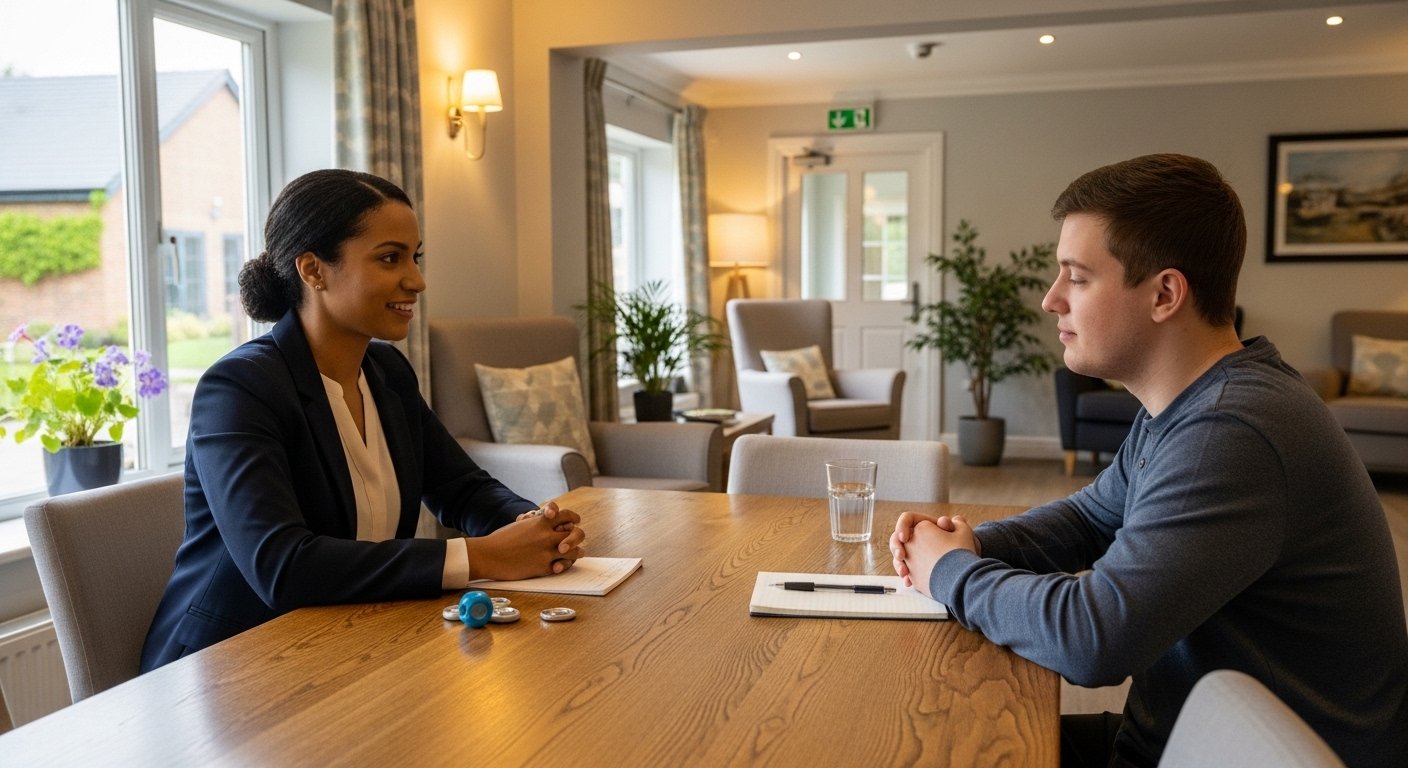
This is relationship-based psychiatric care delivered directly within residential settings serving individuals with Severe and Persistent Mental Illness (SPMI). Our prescribers become part of the treatment environment itself—working alongside therapists, residential staff, Peer Support Specialists, Skills Trainers, and families to stabilize and support some of Oregon’s highest-acuity populations.
You will provide care across a range of residential placements, including:
Large residential settings (approximately 52 beds)
Mid-sized residential settings (approximately 16 beds)
Small community-based placements (approximately 2 beds)
Each environment requires adaptability, presence, emotional intelligence, and strong interdisciplinary collaboration.
About the Program: ECOS & ECS
Our Stronger Residential Services Program provides services under Enhanced Care Outreach Services (ECOS) and Enhanced Care Services (ECS)—specialized Medicaid-supported programs that operate outside of the traditional CCO outpatient structure.
This allows providers to:
Deliver psychiatric care directly in residential environments
Support individuals with complex psychiatric and social needs
Focus on clinical outcomes—not rushed productivity metrics
Build meaningful long-term relationships with clients and teams
Participate in a developing wraparound model of care
Who You’ll Serve
You will work with individuals experiencing:
Schizophrenia spectrum and psychotic disorders
Bipolar disorder
Major depressive disorder
PTSD and complex trauma
Severe anxiety disorders
Co-occurring substance use disorders
Chronic suicidality and repeated hospitalization histories
Many individuals also present with:
Medical complexity
Cognitive impairments
Developmental or social challenges
Histories of failed placements or system cycling
Significant distrust of systems and providers
These are individuals whose housing, food, and safety needs may finally be stabilized—but meaningful psychiatric care has often remained inconsistent, inaccessible, fragmented, or overly medication-focused.
Your role is not simply to prescribe medications.
Your role is to become a stabilizing, trusted clinical presence within the environments where people live.
This Is Not a Quantity-of-People Position
We want to be direct:
This is not “15-minute med checks” all day.
This role prioritizes:
Quality over volume
Presence over speed
Relationships over quotas
Clinical judgment over productivity pressure
We are intentionally building a model where psychiatric providers have the time and flexibility to:
Observe environments directly
Collaborate with residential staff
Understand behavioral patterns longitudinally
Participate in team consultation
Build rapport with highly vulnerable individuals
Provide thoughtful and measured medication management
The best outcomes in high-acuity behavioral health often come from consistency, trust, and integrated relationships—not simply medication adjustments.
What You’ll Do
Depending on licensure and experience, responsibilities may include:
Psychiatric evaluations
Medication management
Ongoing psychiatric follow-up
Collaboration with therapists and case teams
Residential staff consultation
Participation in interdisciplinary treatment planning
Family consultation and psychoeducation
Crisis support and stabilization planning
Review of behavioral and environmental contributors to psychiatric symptoms
This is deeply integrated psychiatric care—not isolated prescribing.
Training & Support
We recognize that not all providers come from psychiatric-specialty backgrounds.
That is okay.
We are open to:
PMHNPs
FNPs transitioning into psychiatric practice
Psychiatrists interested in community-integrated care
For Family Nurse Practitioners and others transitioning into behavioral health, we provide structured internal and external training pathways.
Training may include:
Residential behavioral health immersion
Shadowing across placements
Psychiatric consultation support
Ongoing interdisciplinary consultation
Training in severe mental illness treatment
Trauma-informed care development
Oregon Medicaid behavioral health systems training
We are looking for providers who are thoughtful, collaborative, emotionally grounded, and genuinely interested in this population.
Why This Role Matters
This is one of the most meaningful psychiatric positions in behavioral health today.
You will help:
Prevent psychiatric hospitalization
Reduce emergency department utilization
Support individuals in remaining in the least restrictive setting
Improve medication adherence through relationships—not coercion
Stabilize placements that might otherwise fail
Bring psychiatric access to environments historically underserved
This is systems-level impact delivered person-to-person.
Work Structure & Flexibility
Full-Time = 35 hours/week (benefits eligible)
Flexible scheduling based on placements
Hybrid field/community-based structure
Regionalized placement assignments when possible
Balanced caseloads reflective of acuity and relationship-based care
Compensation
FTE non exempt: $145,600 to $221,312 (Depends on commissions)
$80 an hour ($5,600 per pay period before taxes and deductions) with the potential to earn an extra commission ($0-$2,900 per pay period).
If 70% of the total earned billable services calculated for a pay period (2 weeks) exceed base pay ($5,600), the excess beyond the base pay amount will be earned as a commission!
Pay-period income estimates for transparency (Take a look at the annual estimations):
The minimum per pay period (2 weeks) is 70 hours multiplied by $80 hourly wage creating a total of $5,600 before taxes and deductions. Total commissions that surpass this base amount will be added on to your earnings.
Example: An OHP insurance reimbursement for
Psychiatric diagnostic evaluation with medical services is $254.66 in total
23-37 minutes of “Comprehensive medication services” is $86.22 in total (half for 15min)
23-37 minutes of “Medication Training/Support” is $61.00 in total (half for 15min)
Pay period income estimations:
$6,926 before deductions. (Assuming 26 earned billable service hours per week)
$7,714 before deductions (Assuming 29 earned billable service hours per week)
$5,600 before deductions (Assuming 10, or less, earned billable service hours per week)
This can sometimes be your first few weeks as your caseload builds.
Annual income estimations:
$145,600 before deductions (Average of 21 or less earned billable service hours a week).
$179,816 before deductions (Average of 26 earned billable service hours a week).
$200,564before deductions (Average of 29 earned billable service hours a week).
$221,312 before deductions (Average of 32 earned billable service hours a week).
Includes health/dental/vision (no monthly premium), 401k Matching, 80 PTO hours (these tier every year), 40 sick hours (these tier every year), 10 paid holidays.
Benefits & Growth
Health, Dental, Vision (no monthly premium for full-time)
401k Matching
PTO, Sick Time, Paid Holidays
Free advanced clinical trainings
Supervision and consultation included
Preferred Qualifications
Oregon PMHNP license
Oregon Psychiatrist licensure
FNP with strong interest in psychiatric care and willingness to train
DEA registration (or ability to obtain)
Strong interdisciplinary communication skills
Comfort working with high-acuity populations
Trauma-informed and relationship-centered approach
Ideal Personality Traits
Calm under pressure
Flexible and adaptable
Curious rather than judgmental
Strong relational presence
Systems thinker
Team-oriented
Why Stronger Oregon
At Stronger Oregon, we are building behavioral health systems designed for the future—not simply maintaining the limitations of the past.
We believe psychiatric care works best when providers:
Are embedded in the environments where people live
Have time to build trust
Collaborate closely with interdisciplinary teams
Focus on long-term stabilization rather than transactional prescribing
We are building a statewide integrated behavioral health model that brings together:
Therapists
Prescribers
Peer Support Specialists
Skills Trainers
Residential teams
Community systems
Closer to the client.
Closer to real life.
Closer to what actually works.
The Bottom Line
If you want to:
Practice psychiatry in a more human-centered way
Work with high-acuity populations meaningfully
Escape rushed volume-based medication management
Be part of a new integrated care model
Build deep clinical expertise in real-world behavioral health
Then this role may be exactly what you’ve been looking for.
Join us in building a Stronger Oregon—one relationship, one placement, one breakthrough at a time.